
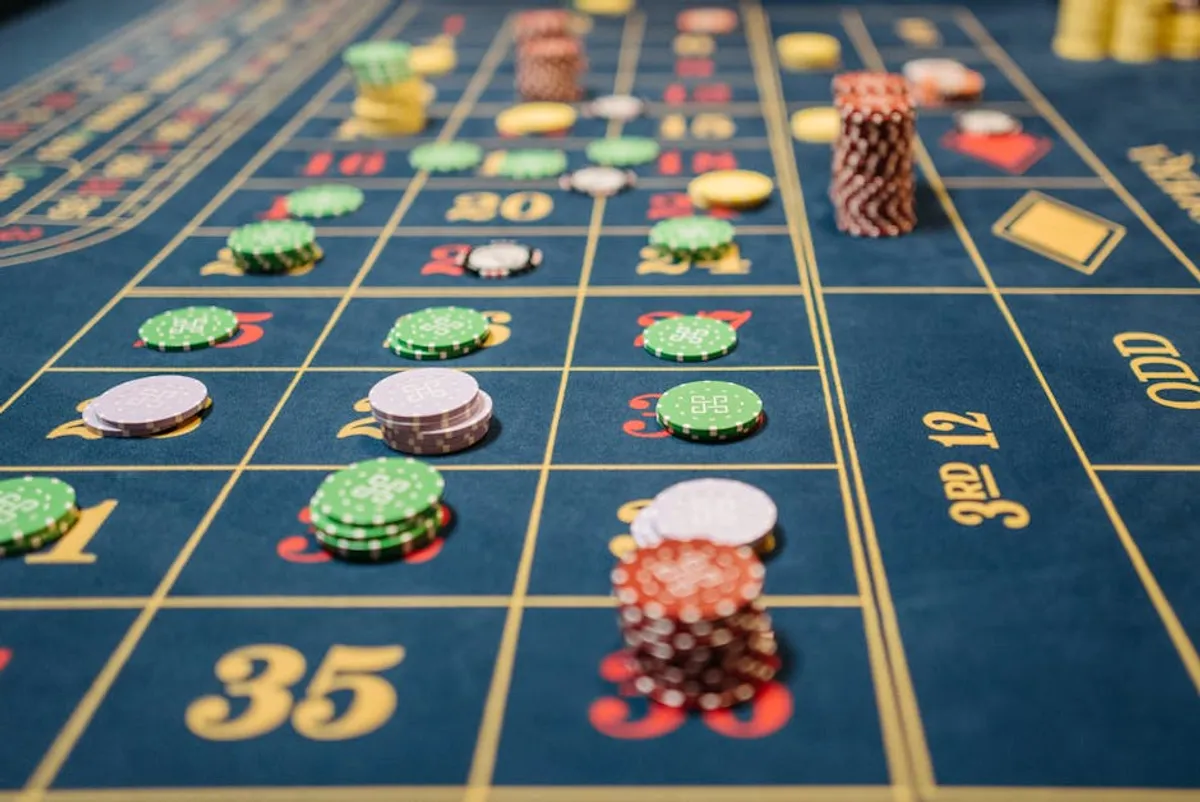
Roulette, a game synonymous with casino floors, often appears straightforward at first glance: place a chip, spin the wheel, and hope for a win. However, the true depth of the game, and the strategic decisions players make, lies in understanding the various betting options available. For content creators, strategists, and those aiming to explain the mechanics of the game, a clear grasp of each bet type – its placement, odds, and payout – is fundamental. This clarity ensures accurate information dissemination and helps players make informed choices, moving beyond mere chance to calculated engagement with the game's inherent probabilities.
Deconstructing the Roulette Table: A Foundation for Bets
Before delving into specific bet types, it is essential to recognize the two primary sections of a roulette table layout. The "inside" section features individual numbers (0-36, plus 00 on American wheels) and small groupings of these numbers. The "outside" section encompasses broader categories like Red/Black, Odd/Even, High/Low, dozens, and columns. The placement of chips within these sections dictates the type of bet, its potential payout, and its corresponding probability of success.
Inside Bets: Precision and Higher Payouts
Inside bets are characterized by their placement directly on or between specific numbers within the numbered grid. These bets cover a smaller range of outcomes, leading to lower probabilities of winning but significantly higher payouts when successful.
Straight Up Bet
This is a wager placed on a single number, including 0 and 00. The chip is positioned squarely within the box of the chosen number.
Coverage: 1 number
Payout: 35 to 1
Rationale: Offers the highest payout for a single successful spin, appealing to players seeking substantial returns on minimal coverage.
Split Bet
A split bet covers two adjacent numbers on the table layout, either horizontally or vertically. The chip is placed on the line separating the two numbers.
Coverage: 2 numbers
Payout: 17 to 1
Rationale: Doubles the chance of winning compared to a Straight Up bet while still offering a considerable payout, balancing risk and reward more favorably for some players.
Street Bet
Also known as a Three-Number Bet or Trio Bet, this wager covers three numbers in a single horizontal row on the layout. The chip is placed on the outer edge of the row.
Coverage: 3 numbers
Payout: 11 to 1
Rationale: Expands coverage to a small group of numbers, providing a higher probability of success than Split bets with a respectable payout.
Corner Bet
A Corner Bet, or Square Bet, covers four numbers that meet at a single corner on the layout. The chip is placed on the shared corner where the four numbers intersect.
Coverage: 4 numbers
Payout: 8 to 1
Rationale: Offers broader coverage than a Street bet, further increasing the winning probability while maintaining an attractive payout for its risk level.
Line Bet
Also referred to as a Six-Number Bet or Double Street Bet, this wager covers two adjacent rows of three numbers each, totaling six numbers. The chip is placed on the outer edge of the line separating the two rows.
Coverage: 6 numbers
Payout: 5 to 1
Rationale: Provides the widest coverage among standard inside bets, significantly improving the odds of winning, albeit with a reduced payout compared to more precise wagers.
Pro Tip: While inside bets promise higher payouts, their lower probability of success means they can deplete a bankroll quickly. Content creators should emphasize that these bets are typically favored by players with a higher risk tolerance or those employing specific betting systems designed for short-term volatility.
Outside Bets: Broader Coverage and Lower Risk
Outside bets are placed on the designated boxes surrounding the numbered grid. These bets cover larger groups of numbers or characteristics of numbers, resulting in higher probabilities of winning but commensurately lower payouts.
Red/Black
This bet covers all numbers of a specific color. The chip is placed on the "Red" or "Black" box on the layout.
Coverage: 18 numbers (excluding 0/00)
Payout: 1 to 1 (Even Money)
Rationale: Offers nearly 50% probability of winning, making it a foundational bet for conservative players or those using progression systems.
Odd/Even
This wager covers all odd or all even numbers. The chip is placed on the "Odd" or "Even" box.
Coverage: 18 numbers (excluding 0/00)
Payout: 1 to 1 (Even Money)
Rationale: Similar to Red/Black, it provides a high probability of success, suitable for low-volatility play.
High/Low (1-18/19-36)
This bet covers either the low numbers (1-18) or the high numbers (19-36). The chip is placed on the "1-18" or "19-36" box.
Coverage: 18 numbers (excluding 0/00)
Payout: 1 to 1 (Even Money)
Rationale: Another even-money bet, providing broad coverage and high winning frequency for a steady pace of play.
Dozen Bets
These bets cover one of three groups of twelve numbers: 1st Dozen (1-12), 2nd Dozen (13-24), or 3rd Dozen (25-36). The chip is placed in the respective "1st 12", "2nd 12", or "3rd 12" box.
Coverage: 12 numbers
Payout: 2 to 1
Rationale: Offers a one-third chance of winning (excluding 0/00), providing a better payout than even-money bets while still covering a substantial portion of the wheel.
Column Bets
Similar to Dozen Bets, Column Bets cover twelve numbers arranged in one of the three vertical columns on the layout. The chip is placed in the "2 to 1" box at the bottom of the chosen column.
Coverage: 12 numbers
Payout: 2 to 1
Rationale: Functionally identical to Dozen Bets in terms of coverage and payout, offering an alternative grouping for players who prefer a different visual arrangement or strategy. Many players enjoy the interactive experience that live casino games explained offer, especially when a live dealer is involved.
Key distinctions between Inside and Outside Bets:
- Probability vs. Payout: Outside bets offer higher win probabilities with lower payouts (often 1:1 or 2:1), while inside bets have lower win probabilities but significantly higher payouts (up to 35:1).
- Risk Profile: Outside bets are generally considered lower risk due to their broader coverage. Inside bets are higher risk due to their specificity.
- Strategic Application: Players often use outside bets for consistent, smaller wins or to manage bankroll, while inside bets are for chasing larger, less frequent returns.
Special Rules and Their Commercial Implications
Certain roulette variants incorporate special rules that can influence a player's expected return and thus, the commercial appeal of the game. For example, in European roulette, the single zero reduces the house edge compared to American roulette with its double zero. Additionally, rules like "La Partage" and "En Prison," often found in French roulette, further reduce the house edge on even-money bets.
La Partage: If the ball lands on zero, players with even-money bets lose only half their stake.
En Prison: If the ball lands on zero, even-money bets are "imprisoned" for the next spin. If the next spin is a win, the original stake is returned; if it's a loss, the stake is forfeited.
These rules are critical for content creators to highlight, as they directly impact the player's long-term prospects and can differentiate one roulette offering from another in a competitive market.
Practical Bet Selection: Tailoring Strategy for Engagement
Understanding roulette bets moves beyond mere definitions; it informs how players approach the game and, consequently, how content should be structured around it. Players rarely stick to a single bet type exclusively. Instead, they often combine inside and outside bets to manage risk and reward. For instance, a player might place a dozen bet for a reasonable payout while simultaneously covering a few specific numbers with straight-up or split bets for a chance at a larger win. This layered approach to betting is a common strategy that content should explore, detailing how different combinations affect overall volatility and potential returns. Effective content will guide players not just on 'what' each bet is, but 'why' and 'when' to consider using it, aligning with various risk tolerances and bankroll management objectives. This provides actionable insights that enhance player engagement and decision-making.
Frequently Asked Questions about Roulette Bets
What is the difference between European and American roulette bets?
The primary difference lies in the wheel layout: European roulette has a single zero (0), while American roulette has both a single zero (0) and a double zero (00). This extra pocket in American roulette increases the house edge, meaning the odds and payouts for specific bets are slightly less favorable for the player compared to European roulette, though the fundamental bet types remain similar.
Which roulette bet has the highest payout?
The Straight Up bet, covering a single number, offers the highest payout in roulette at 35 to 1. This means if you bet one unit and win, you receive 35 units plus your original stake back.
Are there any bets that cover the zero or double zero?
Yes, the zero (0) and double zero (00) can be covered by several bet types. A Straight Up bet can be placed directly on 0 or 00. You can also place a Split bet covering 0 and 1, 0 and 2, 0 and 3 (European), or 0 and 00, 00 and 2, 0 and 3 (American). Additionally, a Corner bet can include 0, 1, 2, 3 (European) or 00, 0, 1, 2 or 00, 0, 2, 3 (American).
What are "even money" bets in roulette?
Even money bets are outside bets that offer a payout of 1 to 1, meaning you win back your original stake plus an equal amount. These include Red/Black, Odd/Even, and High/Low (1-18/19-36) bets. They cover nearly half of the numbers on the wheel (excluding 0 and 00), providing the highest probability of winning on any given spin.